

Early childhood education plays a vital role in shaping a child’s cognitive, social, and emotional development. Among the various teaching methodologies, play-based learning has emerged as one of the most effective approaches. This method fosters creativity, enhances problem-solving skills, and builds a strong foundation for lifelong learning.
What is Play-based Learning?
Play-based learning is an educational approach that integrates play with structured learning objectives. It allows children to explore, discover, and engage with their environment in a meaningful way. Unlike traditional rote learning, this method encourages curiosity and hands-on experiences that facilitate deeper understanding.
Key Benefits of this Learning Method
1. Cognitive Development
Through activities like puzzles, building blocks, and storytelling, children develop critical thinking, memory retention, and language skills. Playing with peers also improves their ability to follow instructions and solve problems.
2. Social and Emotional Growth
Group activities encourage teamwork, communication, and empathy. This helps children understand emotions, practice self-regulation, and build relationships with others, laying the groundwork for emotional intelligence.
3. Enhancing Creativity and Imagination
Play stimulates creativity by allowing children to express themselves freely. Art, music, and role-playing activities foster imaginative thinking and help children develop their unique perspectives.
4. Physical Development
Gross and fine motor skills are enhanced through movement-based play. Activities like running, jumping, and manipulating small objects improve coordination, strength, and overall physical health.
Implementing Play-based Learning at Home and School
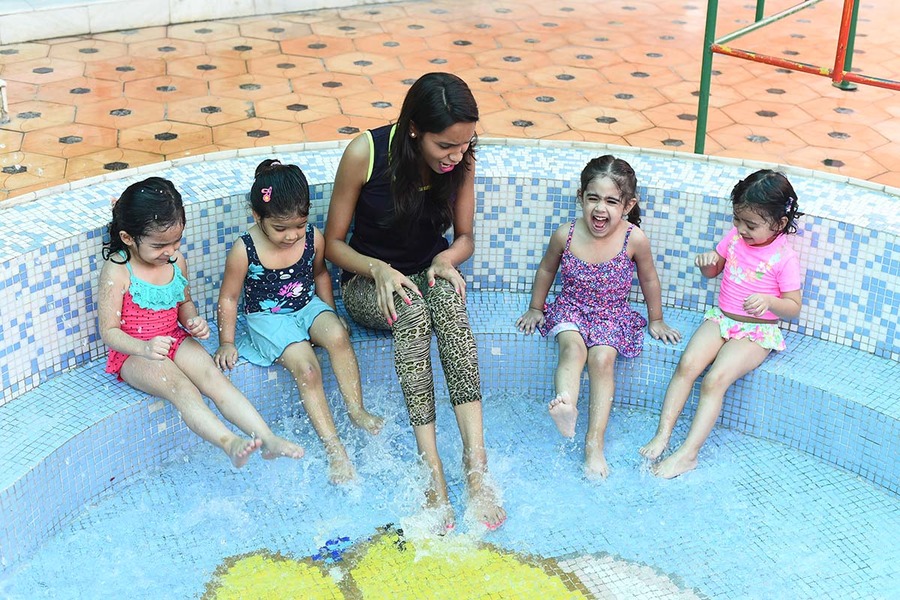
For Educators
- Design interactive classrooms with learning centers.
- Encourage pretend play and hands-on activities.
- Integrate storytelling and music into lessons.
The Eden Castle School has ensured that its play & learn spaces that hold art, crafts, music, storytelling, reading and personality development interactions. Pretend play is a crucial part of all our creative activities. Know more about all about our Activities for Children here.
For Parents
- Engage children in outdoor play and physical activities.
- Use educational toys and games to reinforce learning.
- Foster a habit of reading through interactive storytelling.
Visit our Parent Updates section for helpful articles for Indoor & Outdoor activities.
This way of learning through play is a powerful tool that supports holistic development in children. By blending fun with education, we can create a nurturing environment that helps young learners thrive. Whether at home or in school, incorporating play into daily routines will foster a love for learning that lasts a lifetime.
Leave a Reply